

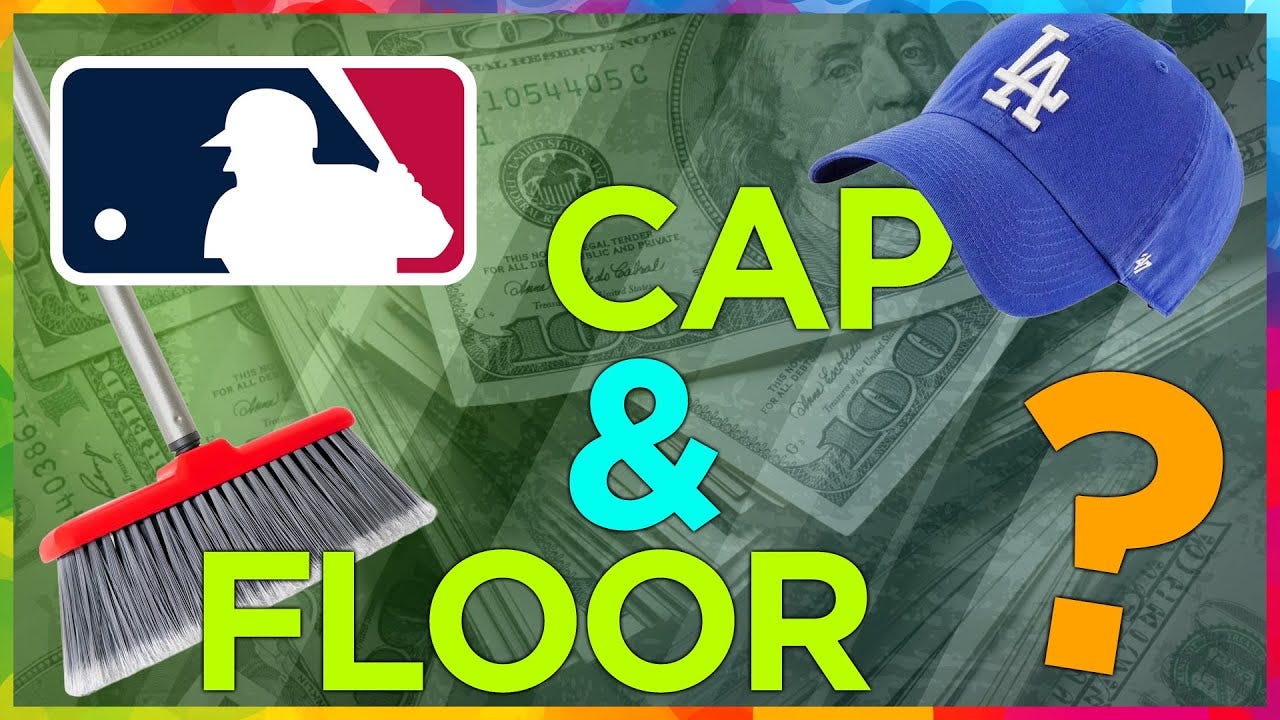
We’re days away from the MLB All-Star break, and honestly, the trade market has been pretty underwhelming so far – a couple of minor moves, a lot of rumors, but not much that really grabs you. Meanwhile, the thing everyone around front offices is talking about on top of who’s getting dealt. But instead the Collective Bargaining Agreement and whether baseball is finally headed for a real salary cap.
If you want to understand why MLB owners are suddenly so set on having a cap-and-floor system, you don’t have to look inside baseball at all – just look at what the Los Angeles Clippers and Toronto Raptors just did with Kawhi Leonard. Kawhi, 35 years old, on a $50 million expiring deal, gets shipped back to Toronto for Brandon Ingram, Gradey Dick, two first-rounders, a swap, and a couple of seconds, and everyone kind of shrugs and says, Yeah, that makes sense in this cap environment.
In the NBA, a superstar with a massive salary being moved is normal. The money matching rules are satisfied, picks change hands, and life goes on inside a structure that owners can map out years in advance. Toronto knows what they will need to pay Leonard, what a two-year extension for him can look like (up to around $123 million), and how that slots alongside their other contracts. The Clippers, in turn, pivot into a younger, cheaper core with Ingram and Dick while resetting their future flexibility and staying within the cap and tax system.
MLB owners look at that and see something they’ve never really had. Cost certainty at the top end, enforced by rules, not just discipline and handshake understandings between billionaires. For decades, baseball has had essentially no hard restrictions on what teams can spend on payroll, which is how you end up with teams handing out the richest average annual value deal in league history to a free agent, followed by another megadeal, while smaller clubs just hope their player-development machine keeps them afloat.
The league’s opening CBA proposal this spring basically screamed, We want what the NBA has. A hard cap around $245 million, a hard floor around $171 million, a 50/50 revenue split, and centralized TV money – that’s straight out of the playbook owners see working in capped leagues. They’re pitching it as the best solution for competitive balance, pointing out that big-payroll clubs have dominated recent World Series while fan polling supposedly shows people want something more like the NFL or NBA.
From an owner’s perspective, the Kawhi deal is a perfect advertisement for that system. The Clippers are under league investigation for allegedly trying to funnel extra money to Kawhi through a side endorsement arrangement – essentially a creative attempt to get him more than the cap allows. The message from the NBA is clear; trade stars you are paying but you can’t blow up the cost structure to do it. Even when the rules get stretched, they eventually snap back.
Baseball, by contrast, has lived in this wild west where if the Los Angeles Dodgers or New York Yankees want to blow past everyone, the only real pushback is a luxury tax bill they can easily afford. Owners in that middle band – not the true small-market diehards, not the mega-revenue juggernauts – see the NBA and think, Why don’t we have that guardrail?
A cap-and-floor system narrows the gap between the highest and lowest payrolls to something like $75 million and locks in a guaranteed revenue share for players. It might sound player-friendly on paper, but what it really does is carve out a hard ceiling that keeps the Kyle Tucker–type contracts from escalating indefinitely.
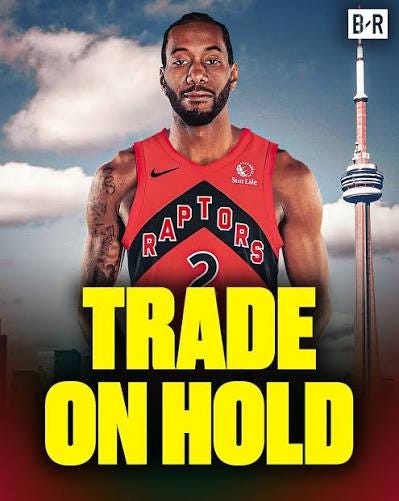
The Kawhi trade also highlights another thing owners love; predictability in player movement. The NBA’s CBA and salary cap rules basically turn star movement into a math problem – salaries have to match, aprons limit how aggressive the biggest spenders can be, extensions are governed by clear criteria, and cap exceptions are codified.
MLB, without a cap, has trades and free agency that are much more about who’s willing to blow out their budget this year or next, or stash money off the books with clever accounting. A cap-and-floor model reduces that chaos and makes the labor market feel more like a spreadsheet than a poker table.
Of course, the players see all of this very differently. They know a hard cap is fundamentally about cost control, not competitive balance, and the union has treated cap talk as basically a declaration of war ever since the last time owners tried it and ended up canceling a World Series. That’s why everyone is already bracing for a possible lockout once this CBA expires. Neither side is just haggling over luxury tax thresholds or minimum salary tweaks this time, they’re fighting over the entire economic system.
Here’s the thing, folks: If you’re wondering why the rhetoric from ownership has gotten so sharp – why you keep seeing anonymous quotes about pursuing a cap regardless of the cost and changing how the game operates – remember Kawhi in July and the way the NBA quietly absorbs a blockbuster like that without blowing up its financial equilibrium.
With that . . . MLB owners have spent years watching that from afar, and now, with this CBA on the line, they’re trying to drag baseball into that same world, even if it means shutting the whole sport down to get there.
If you do not work with them, that should not stop you from picking a side to root for in the labor battle.
Please visit Binary News where we post regular opinion pieces about including but not limited to business, politics, sports, and technology.