

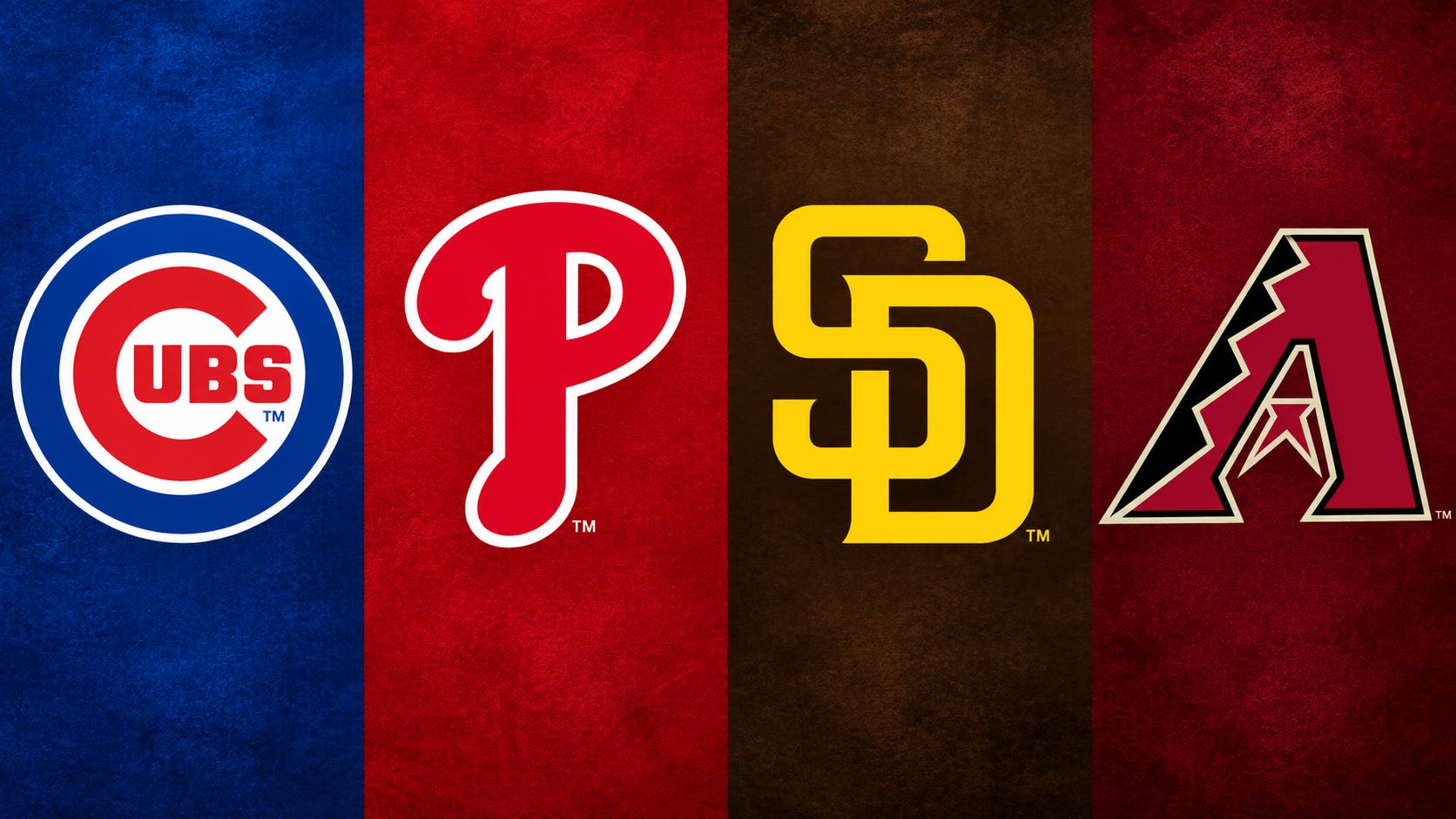
The National League Wild Card race has reached the kind of finish baseball fans claim to love, as long as their own team is not involved. With five games remaining entering Wednesday, the Cubs, Phillies and Padres are all 87-70. The issue is where October begins, because only the highest Wild Card team hosts a series.
A fourth team also remains in the conversation with only 5 games left. The Arizona Diamondbacks sit at 83-74, four games behind all three Wild Card leaders. Their elimination number is two, and one projection gives the Diamondbacks a 1.6 percent chance entering play Wednesday.
Arizona has almost no room for another mistake. It has two games at Colorado and three in San Diego; winning out would produce 88 victories. The Diamondbacks must also hope that at least one of the Cubs, Phillies or Padres collapses over the final five games.
The weekend series against San Diego at least gives Arizona a small measure of control. If still alive in San Diego, every Arizona victory would also damage a team it is chasing. Still, Arizona could be eliminated within the next couple of days, and the Cubs can clinch their own postseason berth with one win or one Diamondbacks loss because Chicago owns the head-to-head tiebreaker.
If the three current leaders finish with identical records, Chicago will emerge as the No. 4 seed. Philadelphia would be No. 5 and San Diego would fall to No. 6. Philadelphia would then visit Wrigley Field, while San Diego would go to Atlanta. All Wild Card games are played at the higher seed’s park, making this meaningful.
The reason is simple, the Cubs already did the hard work during the season series. Chicago went 6-1 against Philadelphia and 5-1 against San Diego, giving the Cubs the head-to-head advantage over both clubs. Philadelphia swept all six of its games against San Diego. The resulting order is Chicago, Philadelphia and San Diego.
There will not be a Game 163 to settle anything. MLB eliminated extra tiebreaker games when it expanded the postseason. Head-to-head record comes first, followed when necessary by intradivision, intraleague and interleague formulas. Among the three current leaders, the first step answers every relevant question.
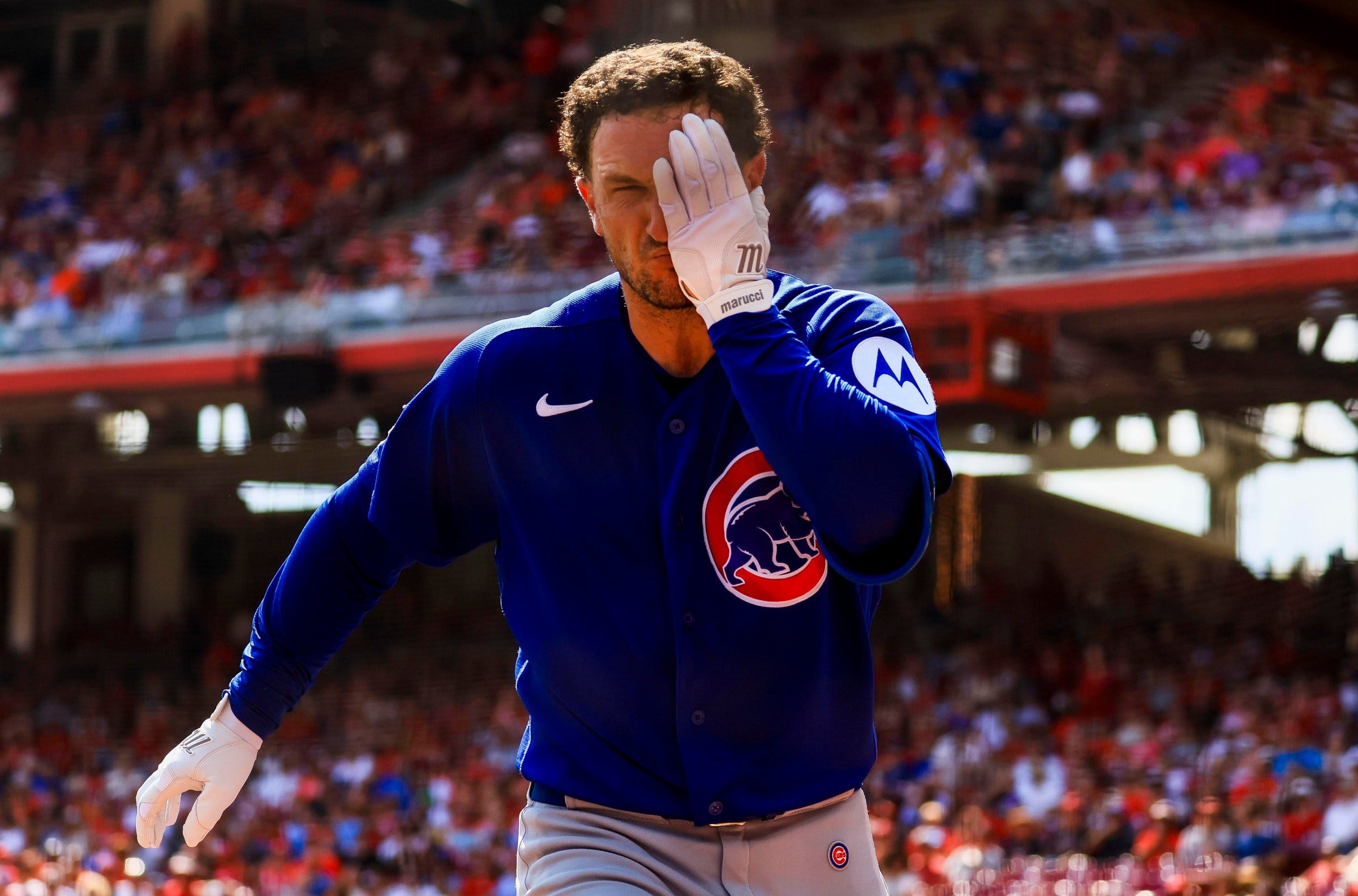
That puts the Cubs in an enviable position, but their hold on it suddenly feels less comfortable because of Alex Bregman’s frightening injury. Bregman suffered multiple fractures in his left cheek after Michael Busch’s check-swing foul ball struck him while he waited near the on-deck circle in Cincinnati. Encouragingly, his vision is fine, he needs no surgery and is not on the injured list.
Bregman tracked machine pitches and did light work Tuesday, and Craig Counsell has not ruled out a regular-season return. Still, this is not an ordinary bruise that a player simply tapes up and ignores. The swelling must subside and his symptoms cannot increase as his activity grows. Even after medical clearance, returning to the batter’s box following such a blow presents an understandable challenge.
His absence changes the lineup in a meaningful way. Bregman has hit .262 with a .352 on-base percentage, 26 home runs, 89 RBIs and an .804 OPS this season. That is middle-of-the-order production, but his value extends beyond the statistics. When one run could determine whether Chicago opens at Wrigley or travels, losing a disciplined hitter reshapes late-inning matchups.
The Cubs can cover third base with Pedro Ramírez, while Matt Shaw is another option, but replacing the position is not the same as replacing the player. Bregman controls the strike zone and has years of high-pressure October experience. Chicago can survive several games without him, especially with a lineup that has scored 837 runs, but surviving is different from securing the top Wild Card spot.
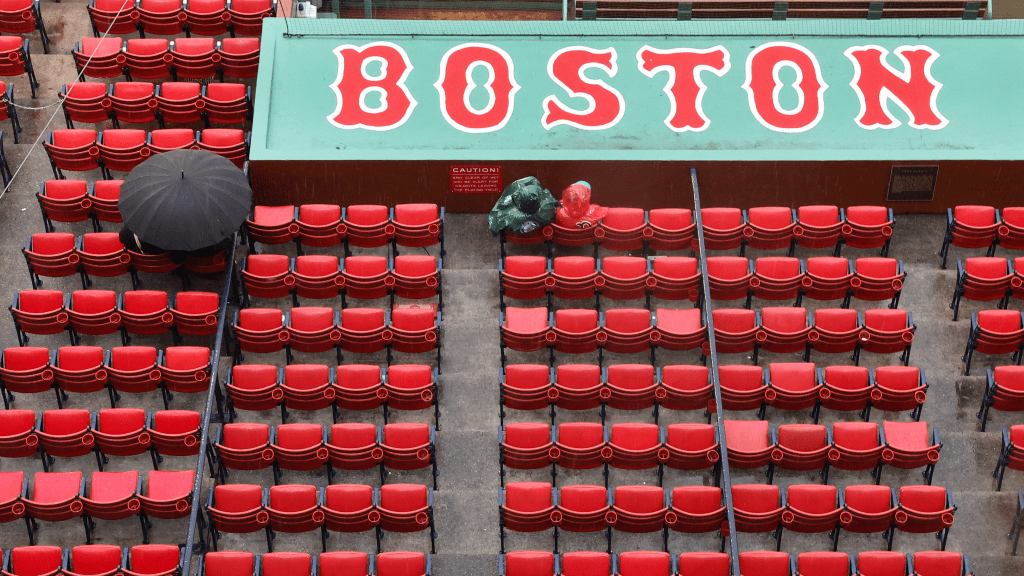
Then there is the weather, because apparently a four-team race and a freak injury were not enough drama. A potentially powerful nor’easter could bring rain, strong winds and coastal flooding to southern New England during the Cubs’ Friday-through-Sunday series against the Red Sox at Fenway Park. Those games could influence several postseason teams’ travel plans.
Despite speculation about moving the series, MLB reportedly had no plans as of Tuesday to take the games out of Boston. More realistic options include changed start times, a Friday or Saturday doubleheader, or Monday games if needed to settle seeding.
Tropicana Field has been mentioned as a speculative alternative because Tampa Bay is finishing its season in Philadelphia, leaving the ballpark available. MLB has not announced it, and relocating two playoff clubs would create another logistical mess. For now, Fenway remains the site, with the league and both teams monitoring the forecast and trying to find playable windows.
Monday is the fallback nobody wants. With the Wild Card Series beginning Tuesday, a makeup could force Chicago to finish Monday in Boston and immediately travel again. It would also scramble the pitching plan, since a starter used Monday would be unavailable at the beginning of a short series.
Here’s the thing, folks: That is the beauty and cruelty of this race. Chicago owns the critical tiebreakers, yet it may have to protect that edge without one of its best hitters and while dodging a nor’easter. Philadelphia knows a tie with Chicago is not enough, San Diego knows a tie with either rival leaves it behind, and Arizona knows it must be nearly perfect just to remain part of the discussion.
With that . . . The arithmetic favors Chicago, but the injury, weather and desperate fourth team make the finish unpredictable.
If you cannot play with them, then root for them!
Please visit Binary News where we post regular opinion pieces about including but not limited to business, politics, sports, and technology.